
Tangem Wallet Review
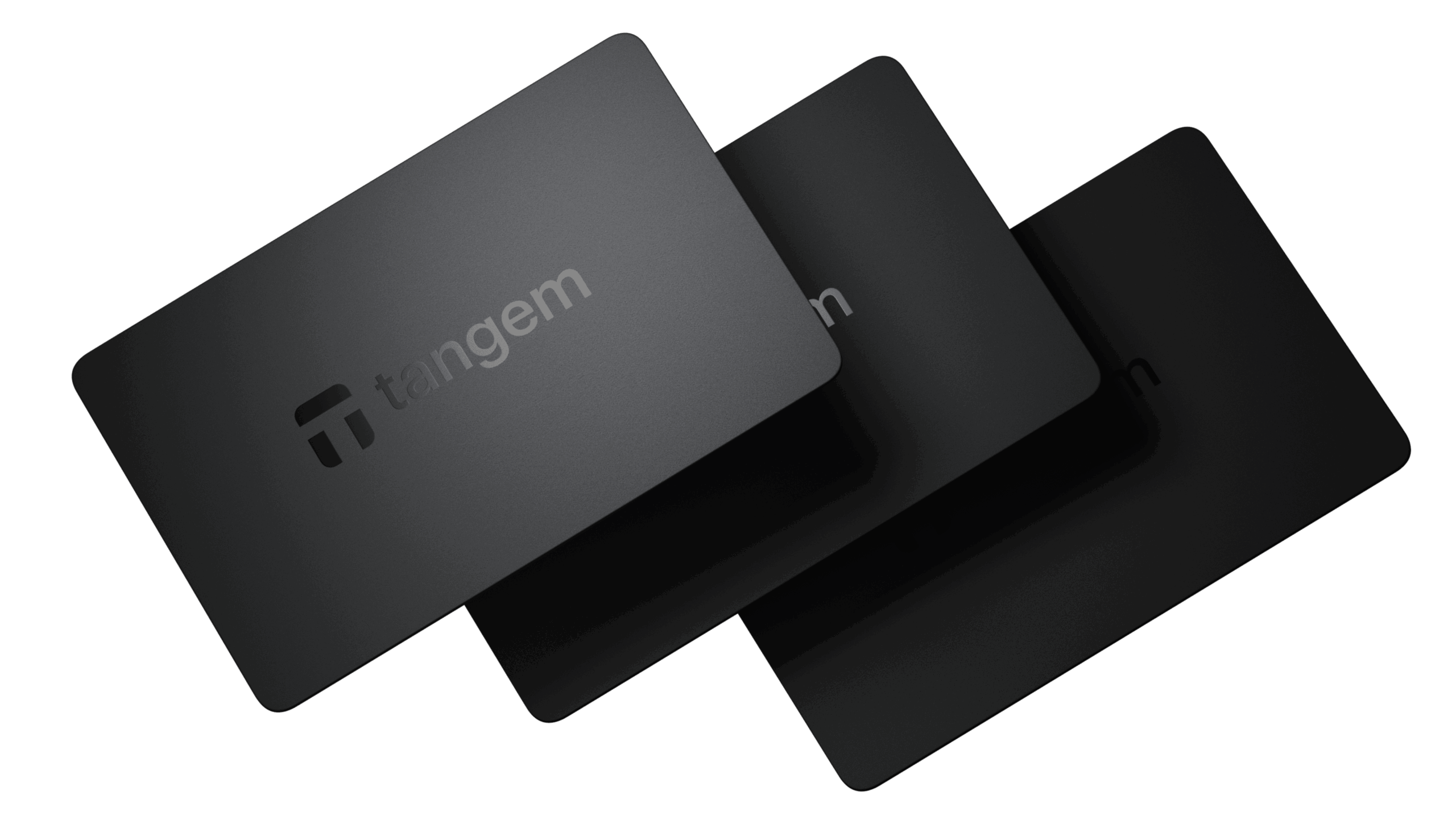
Tangem offers an NFC-based cold wallet that combines the ease of use and strong security of a credit card and a ring. This makes storing cryptocurrencies easy and secure without a traditional seed phrase.
What is the Tangem Wallet?
Tangem is a Swiss company (founded in 2017) that launched the Tangem wallet in 2021. It is a new type of hardware-based cryptocurrency wallet: it consists of NFC cards the size of a bank card and, optionally, a smart ring, which work together with a mobile application.
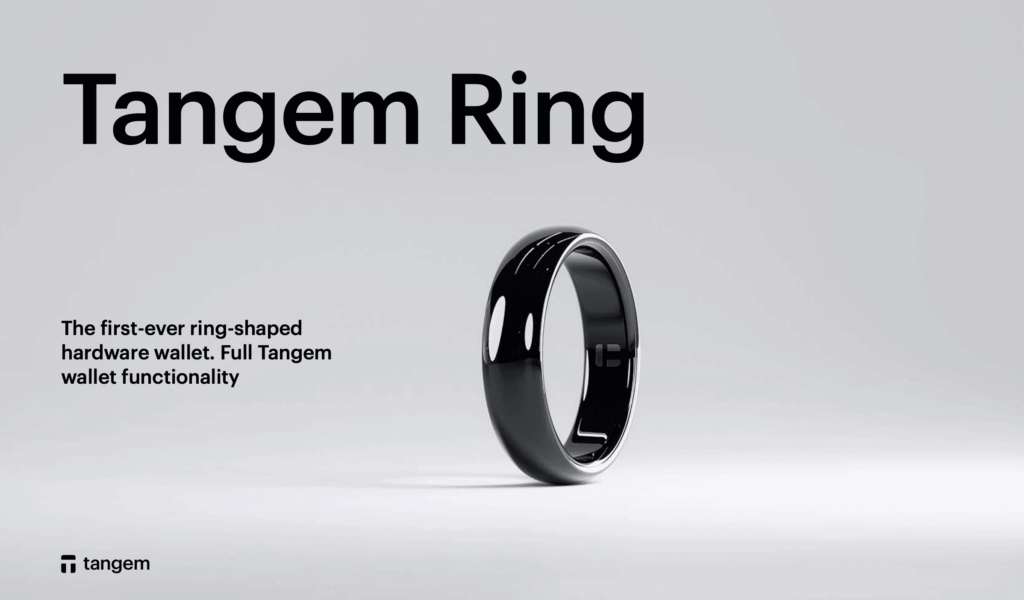
Tangem’s idea is to eliminate the need for a traditional 12-24 word recovery phrase. Instead, the user receives, for example, a pack of 2 or 3 cards, each containing the same wallet key. The cards act as backups for each other: if one is lost or destroyed, the others can still be used to access the funds. A three-card package is typical, and a ring is also available, which serves the same purpose, essentially forming an extra key for the wallet.
The Tangem wallet stores the private keys of cryptocurrencies on a secure chip inside the card or ring. The actual coins or tokens are not on the device, but on the blockchain. Tangem only manages the keys. The Tangem wallet is a cold wallet, meaning it is not constantly connected to the internet. A connection is established when the user opens the Tangem mobile app (Android/iOS) and touches the NFC card to the back of the phone. The wireless NFC connection activates the card’s chip and allows for signing transactions. The Tangem cards or ring do not need to be charged, as they draw power from the phone’s NFC field.
User Experience: NFC Linking and Application
Tangem’s setup is designed to be simple enough even for a beginner. The app guides you step-by-step in creating the wallet. The user must set a PIN code in the app and place the Tangem card on the phone’s NFC reader when prompted.
In our test, we noticed that NFC linking sometimes requires patience: with a Samsung S23 phone, reading the card succeeded only after a few attempts, and linking the ring required repeated tries (about 5 times) before a connection was found. This is likely a challenge related to the sensitivity of the phone’s NFC antenna, but once the right spot was found, linking was an easy process following the on-screen instructions. There are several reports online about challenges with NFC linking, so you need to be patient if the linking doesn’t work right away. I recommend taking the phone out of its case, as it improves the connection, and keep other NFC devices away during the Tangem card pairing.
The Tangem application itself is minimalistic and clear. It has no extra frills, which makes navigation straightforward. Creating a new cryptocurrency address is done with a couple of clicks for several different blockchains. In the test, all the most common networks (like Bitcoin and Ethereum) worked flawlessly, but creating a Solana address, for example, gave an error message a couple of times during the NFC connection. After a brief attempt, Solana was also made to work. In practice, the problem was solved by tapping the card again calmly on the back of the phone in a slightly different spot. Based on this, the Tangem wallet’s usability is at a good level, although in certain situations, the NFC technology requires a little getting used to and care from the user.
Security: Top-Level Chip and No Seed Phrase
Security is Tangem’s key selling point. Each Tangem card has a Samsung security chip (Common Criteria EAL6+ certified), with a security level comparable to chips in biometric passports, for example. The chip generates truly random private keys directly inside the card using an internal random number generator, and the keys are never revealed outside the device. Tangem has also received Visa certification for its chip technology (February 2022), which indicates trust in the device’s security from the traditional payment card industry.
What is particularly exceptional about Tangem is that the user does not need to store or remember long recovery phrases. Traditional hardware wallets require writing a list of 12-24 words on paper as a backup; Tangem’s approach replaces this with physical backup cards. The risk of a user losing their funds by misplacing a piece of paper or falling victim to a phishing scam is reduced when no written seed phrase exists.
On the other hand, the Tangem user must take care of their backup cards: if all cards and the ring were lost, there is no seed phrase to fall back on. (According to Tangem, more experienced users can, if they wish, also generate a traditional seed phrase for the wallet through the app, but this is not required by default.)
Tangem emphasizes that several million of its devices have already been deployed in over 160 countries, and not a single case has been reported where the card’s security has been breached. The wallet’s firmware has been audited in two independent security laboratories (Kudelski Security in Switzerland and Riscure internationally). No critical vulnerabilities were found in either audit. Tangem also grants its cards a 25-year warranty, which underscores the physical durability of the device: the cards are made to withstand extreme temperatures, water, dust, and even X-rays.
However, it is worth mentioning that Tangem faced a reputational hit on the software side at the turn of 2024-2025. On December 29, 2024, in a Reddit discussion, users reported a serious bug in Tangem’s mobile app: the app had inadvertently saved some users’ private keys in log data, which was sent as part of a support request via email to Tangem’s customer support. This meant, in the worst case, that Tangem employees could have had access to that key information. The community criticized the company for its slow disclosure of the problem, as the original message about the issue disappeared from the forum. On December 30, 2024, Tangem admitted the vulnerability and released a corrective update for the app. According to the company, the bug affected only a very few cases: only users who created a wallet with a seed phrase and immediately contacted customer support afterward. Tangem reported that it had deleted all saved logs and urged users to update their app immediately. Lessons were learned from the incident, and it highlighted that even if the hardware card’s security is strong, the quality of the accompanying app and open communication are also important. After this episode, Tangem has improved its communication and continued regular updates to the app.
Features: Broad Support and Built-in Exchange
The Tangem wallet app currently supports over 85 different blockchain networks and allows managing over 16,000 different cryptocurrencies. The most popular cryptos from Bitcoin to Ethereum and Solana work seamlessly.
NFT support is now built into the Tangem app. The app displays basic collection information and images, and NFTs can be both received and sent. Supported networks cover Solana and several EVM chains (including Ethereum, Polygon, Arbitrum, Base, BSC, Optimism). The actual buying/selling is still done in marketplaces via WalletConnect (e.g., OpenSea, Magic Eden). Note: On Solana, sending cNFT/pNFT standards and ”frozen” NFTs is not yet supported. (NFT support was added in app version 5.25, July 4, 2025.)
The Tangem app has integrated features that would normally require separate services. The user can buy cryptocurrencies with fiat money (e.g., euros) directly through the app, thanks to a partnership with a payment service called Mercuryo. We did not test this during our test period. Correspondingly, selling back to a bank account is possible in supported regions with Moonpay.
Additionally, Tangem includes a KYC-free swap function, which allows exchanging tokens within the wallet without needing to transfer funds to an exchange. A service called Tangem Express automatically competes services from several decentralized DeFi exchange platforms and chooses the most affordable route for the user. According to the company, mutual exchanges of stablecoins are possible with commissions as low as 0% on certain platforms, and exchanges of other crypto pairs are also optimized to be as cheap as possible. In our test, small token exchanges between different networks went smoothly; exchange fees remained below 0.5% of the trade sum.
It is noteworthy that support for all the newest networks is not always flawless. For example, on the Mantle network, we observed at the end of the test period that the swap function no longer worked as expected. Tangem will likely fix such recent network problems with updates, but the user should be aware that the list of supported networks is constantly evolving.
Many crypto investors also value the opportunity to earn passive income on their coins. The Tangem app has expanded its support to staking at least Solana, Cosmos, TRON, and recently also TON crypto can be staked directly through Tangem to earn interest rewards paid by the blockchain. The company has even launched its own Solana validator to offer a reliable staking node for its users. The staking processes in Tangem have been made as simple as possible so that even a beginner would dare to try them.
Comparison to Traditional Wallets
Tangem’s approach differs from traditional hardware wallets like Ledger Nano or Trezor. Competing devices usually have a small screen and require a separate USB or Bluetooth connection; Tangem, on the other hand, relies completely on the smartphone as the user interface and NFC touch for confirming operations. This makes Tangem very beginner-friendly. The price of the device is clearly lower than competitors (around €50–€70 depending on the package size, including multiple cards). Furthermore, 80% of Tangem users are said to have chosen the seed-phraseless setup, which shows that a majority trust the company’s innovative backup model.
However, for users interested in openness, Tangem has a couple of compromises. The device has been audited, but it is not a fully open-source project the core part of the chip’s software is controlled by the manufacturer (although Tangem’s app code has been opened for review). The Tangem card itself also does not have a screen, so the user must trust the information displayed by the mobile app when confirming a transfer. This is a theoretical security risk: if the phone were infected with malware and showed the wrong recipient address, the Tangem card alone would not reveal it, as it only signs the transaction requested by the phone. Tangem aims to address this with the app’s security functions: every transfer requires both the card’s presence and the user’s PIN or biometric authentication in the app, and in WalletConnect connections, the app warns about malicious smart contracts in advance. Still, for the most cautious users, a traditional screen that verifies transaction details might be a feature they find lacking in Tangem.
Tangem continues its product development actively. Tangem Pay is an upcoming service that will combine traditional payment cards with a crypto wallet: the company announced on July 4, 2024, a collaboration with Visa with the goal of releasing a payment card that functions as both a normal Visa card and a self-custodial crypto wallet. Tangem’s technology received Visa’s approval back in 2022, and Tangem Pay is expected to bring the ability to pay with crypto assets directly at regular store payment terminals. In a statement, Tangem’s founder Andrey Kurennykh described the new card as a ”two-in-one solution that combines the convenience of a regular bank card and the possibilities of a self-custodial crypto wallet into one card.” According to him, this is a significant step that makes utilizing both traditional financial services and crypto assets easier for the average user. If Tangem succeeds in launching the service as promised, it will further narrow the gap between cryptocurrencies and everyday payments.
Summary
The Tangem wallet represents a new generation of cryptocurrency storage solutions that focuses on ease of use without compromising too much on security. The NFC card and ring bring a physical feel to key management and remove many of the pain points of traditional wallets, such as cumbersome backup phrases. At the same time, Tangem has shown that its hardware is very strongly secured. The devices have been used unbroken for several years by a large user base. On the mobile app side, the company has faced challenges but has reacted to them quickly and improved its system.
Overall, Tangem offers a beginner a secure and effortless way to store cryptocurrencies in self-custody. It has brought hardware wallets one step closer to the mainstream by making their use almost as easy as opening a mobile bank. Next, attention will turn to how Tangem delivers on its promises of new features.
Disclaimer: Kryptouutiset.net received the Tangem cards and ring for testing without compensation directly from Tangem AG. This review contains affiliate links from which kryptouutiset.net receives a commission and the user of the link gets a 10% discount.
Disclaimer: This article is intended for informational purposes only. It is not offered or intended to be used as legal, tax, investment, financial, or other advice.